Key Takeaways:
Patch panels are an integral part of network infrastructure. They crucially organize network cables, facilitate efficient data management, and simplify maintenance and upgrades. Understanding their function and benefits can significantly enhance network performance and reliability.
Table of Contents:
- Introduction
- What Are Patch Panels?
- How Do Patch Panels Work?
- Types of Patch Panels
- Benefits of Using Patch Panels
- Installation and Best Practices
- Conclusion
Introduction
In modern network infrastructure, efficiency and organization are the keys to seamless data transmission and digital communication. As the complexity and scale of global networking grow, so does the significance of systems that manage these vast networks. One of the critical components within any network setup is the patch panel. Although often overlooked, patch panels are essential for managing and maintaining a streamlined and efficient network infrastructure. Their role extends beyond mere connectivity; they provide an infrastructure that supports data flow, scalability, and network reliability. In this article, we dive into the concept of patch panels, their operation, types, benefits, and best practices for installation and maintenance.
What Are Patch Panels?
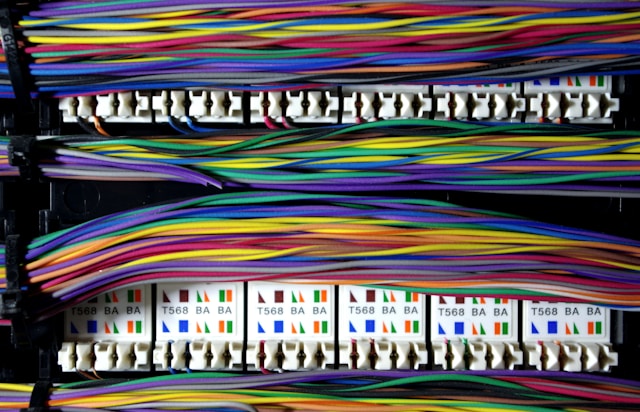
Patch panels can be visualized as the central points in network systems where cables from various devices converge. They are panels, usually mounted on racks, that house multiple network ports. Each port in the patch panel can connect to a cable from another network device. This design enables the organization of wires, facilitating precise and efficient management. Patch panels are indispensable for maintaining a tidy network, where cables do not become entangled, which can lead to errors and inefficiencies. Implementing patch panels, such as patch panels Nashville, can significantly optimize network functionality, proving pivotal for both small-scale setups and extensive data centers.
How Do Patch Panels Work?
The operation of patch panels is essential to understanding their value in network infrastructure. When devices within a network need to communicate, their data signals travel through cables to the patch panel. The panel, equipped with various ports, receives these signals and routes them to their destinations. This structured cabling system means cables must only run to and from the patch panel rather than directly from device to device. The patch panel becomes the core through which the network’s signal traffic flows by centralizing data and power source connections.
When a network change is necessary, such as connecting a new device or rerouting data traffic, it is done quickly at the patch panel. This functionality makes patch panels indispensable for any network that expects changes or growth. They enable altering connections with minimal inconvenience or downtime, making them vital in dynamic environments where fast scalability is required.
Types of Patch Panels
The diversity in patch panel types signifies their adaptability to different network needs and configurations. The primary categories are copper and fiber optic patch panels, each serving a specific purpose aligned with network infrastructure requirements.
Copper patch panels are most frequently employed in ethernet networks and are common in residential and commercial settings. These panels support various data speeds and are renowned for their reliability and ease of use. They simplify the management of LAN (Local Area Network) and are typically found in backbone connections where durability is necessary.
Fiber optic patch panels, on the other hand, cater to networks requiring high-speed data transfer and long-distance communication. These panels handle substantial bandwidth and ensure quick transmission speeds, making them ideal for large enterprises or data centers managing voluminous data traffic. Fiber optic panels are vital when the speed of communication and data transfer is a priority, greatly enhancing the performance of network systems that demand such capabilities.
Benefits of Using Patch Panels
One key advantage of employing patch panels is their capacity to maintain network organization and reduce clutter. Properly implementing patch panels results in neat and orderly cabling systems, which are easier to manage and less prone to errors and mishaps. The organization of cables ensures that troubleshooting becomes straightforward, as each connection can be easily identified and accessed.
Patch panels also provide significant scalability and flexibility benefits. Expanding or altering a network configuration becomes a streamlined process, with fewer disruptions and simplified logistics. This ease of scaling ensures businesses can adjust quickly and efficiently to new demands and technological advancements.
Another major benefit of good patch panel management is the reduction in downtime. Because network changes and maintenance tasks can be carried out swiftly and often without interfering with the rest of the network, users experience minimal downtime, which is critical for maintaining productivity and service standards.
Installation and Best Practices
Proper installation and maintenance of patch panels are imperative to harnessing their full potential and achieving reliable network performance. When installing patch panels, it is critical to ensure they are placed in well-ventilated locations with enough space for future expansions. This planning goes a long way in prolonging the life of the equipment and maintaining optimal performance.
A vital aspect of the installation is labeling. Each cable should be marked according to its destination or purpose, allowing quick identification and easy management. Accurate labeling prevents confusion during maintenance or expansion, reducing the likelihood of disruption and minimizing errors.
Regular checks and balances in the form of maintenance routines also ensure that patch panels operate efficiently. Dust and debris accumulation should be monitored and addressed promptly, and physical inspections are necessary to confirm that no connections are loose or damaged. Consistent attention to these details will ensure the longevity and reliability of the patch panels, contributing to the overall success of the network infrastructure.
Conclusion
Patch panels, though often underappreciated in the vast network infrastructure landscape, provide vital organizational and operational benefits. They serve as the backbone that supports efficient data management and seamless connectivity, which is essential in today’s data-driven environment. Implementing patch panels thoughtfully can transform an overburdened network into a model of clarity and functionality, paving the way for growth and innovation.
As businesses and industries continue to expand their reliance on robust networks, the importance of achieving and maintaining efficient and scalable network infrastructure cannot be overstated. With careful planning, implementation, and maintenance, patch panels contribute immeasurably to realizing these objectives, ensuring that networks remain functional and adaptable to the shifting demands of the digital age.
Ultimately, understanding and utilizing patch panels allows organizations to streamline operations, enhance efficiency, and deliver reliable network services, positioning themselves for success amid the challenges and opportunities of modern technology.