Table of Contents
- Why Collect Antique Chess Sets?
- Notable Antique Chess Sets
- Materials and Craftsmanship
- Establishing Provenance
- Caring for Your Collection
- Investing in Antique Chess Sets
- Resources for Collectors
Chess is much more than a game—it’s a gateway into the artistry, culture, and ingenuity of civilizations across the centuries. For many enthusiasts, the appeal lies not only in the battles waged on the board but in the opportunity to discover rare treasures that have outlasted empires. By collecting antique chess sets, aficionados enter a world where craftsmanship and history intersect, finding pieces that eloquently narrate their own stories. Among the most prestigious names in this arena, the John Jaques Company stands out for its centuries-long legacy of exquisite set design and innovation.
Every antique chess set tells a story, bridging the past with the present. These collections showcase how chess has been shaped by the hands of artisans and by the cultures that valued it. Whether meticulously hand-carved or cast in precious metals, an antique set provides collectors with a tangible link to the lives, traditions, and creative genius of those who played with them centuries ago.
For some, collecting is about mastery of the game’s rich tradition. For others, it’s a way to preserve precious objects that blend artistry and utility. Whatever the motivation, owning antique chess sets often leads collectors along a journey of discovery—uncovering the stories of distant lands, legendary tournaments, and even historic matches that have made their mark in history books.
One of the key joys of collecting is the thrill of encountering rare and singular sets, whether in person or through esteemed curators and dealers. For instance, certain sets have become iconic, their provenance and legacy bolstered by appearances in museums or private exhibitions. The community around antique chess collecting further deepens the experience, offering collectors the opportunity to discuss, trade, and display their cherished finds.
Why Collect Antique Chess Sets?
Collecting antique chess sets is a passion that combines a love for the game with a profound appreciation for history and the artistry of the pieces. Each set is a miniature monument to its time, reflecting the social and cultural contexts in which it was created. For many collectors, these sets serve as both exquisite decorative pieces and cherished artifacts that spark conversations and fuel research. The appeal can also be financial, as well-preserved sets with unique origin stories increase in value over time.
Notable Antique Chess Sets
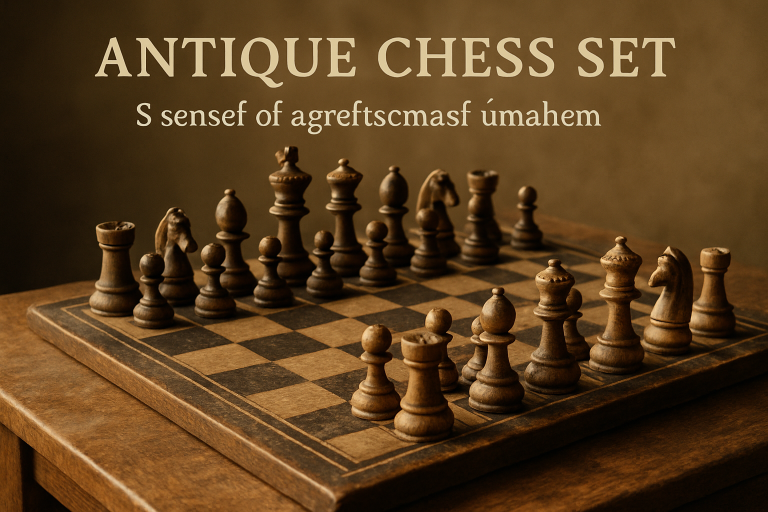
Among the many antique sets that have achieved legendary status, the Charlemagne Chess Set is particularly memorable. Dating to the 11th century, this set is celebrated not only for its ornate design but for its role as a window into the medieval mind. Another iconic set, the Lewis Chessmen, discovered on a Scottish beach in the 19th century, now resides in the British Museum and continues to inspire art and popular culture alike.
Some sets reflect remarkable historical milestones, such as those produced for major world exhibitions, royal gifts, or prestigious tournaments. The world’s museums and private collections are filled with chess pieces that feature detailed inscriptions, fine materials, and rare motifs. Studying them reveals the evolution of chess as both a game and a global cultural force.
Materials and Craftsmanship
The material composition of antique chess sets is as diverse as their origins. Ebony, rosewood, and boxwood have long been favored for their durability and ability to take on fine detail. At the same time, ivory became a popular choice in the 18th and 19th centuries for luxury sets. Metal sets—often crafted from silver, bronze, or even gold—display exceptional ornamental work and were typically reserved for the upper echelon of society.
The artistry in these sets is the work of master artisans, whose skills elevated everyday objects into heirlooms. Each piece can be a study in miniature sculpture, with details that capture not only physical likenesses but also the spirit, national identity, or the zeitgeist of an era. The diversity in styles—from simple and utilitarian to flamboyant and intricate—speaks to the evolving taste and priorities of chess players through the ages.
Establishing Provenance
Verifying the authenticity and historic lineage of a chess set greatly enhances its significance and market value. Provenance—tracing the ownership and origins of a set—can be established through auction records, historical documentation, and expert appraisal. An extraordinary example is the Japanese ivory chess set, which was authenticated as belonging to King Farouk of Egypt, a detail that exponentially increased its desirability. More about establishing provenance can be found in academic and collector-focused publications.
Caring for Your Collection
Proper preservation is crucial for maintaining both value and historical integrity. Antique chess sets should be displayed away from direct sunlight, which can bleach finishes and fade paint. Stable humidity is crucial, especially for organic materials like wood and ivory, which are prone to cracking and warping. Cleaning must always be approached delicately—using soft brushes and non-abrasive cloths is best, and harsh chemicals should be avoided. Enlisting professional conservators for restoration ensures that vintage sets remain in pristine condition.
Investing in Antique Chess Sets
The world of antique chess sets extends beyond passion—many collectors view their acquisitions as long-term investments. The market for rare and historic sets is robust, with singular items often fetching impressive sums at auction. Notably, the Pearl Royale Chess Set was sold for $4 million, underscoring the high ceiling of this niche collectible.
The increasing interest in chess as both a pastime and a cultural phenomenon continually drives prices upward, especially for sets with well-documented provenance or those linked to chess legends and historic moments.
Resources for Collectors
Whether you’re a novice or a seasoned collector, numerous avenues can enhance your expertise and your collection. Reputable antique dealers, particularly those with decades of specialization in chess pieces, offer both authentication and in-depth knowledge about specific makers and pivotal moments in the history of chess. Auctions, both online and in major cities, provide opportunities to discover rare sets and gain insight into current market values.
Online forums, collector organizations, and social media communities connect chess lovers globally, making it easier to trade, discuss, and learn. Prominent publications and museum resources regularly feature articles and exhibitions that shed light on exceptional sets, evolving connoisseurship, and the ever-expanding history of chess collecting.
Collecting antique chess sets bridges the gap between artistic expression and intellectual pursuit, offering a rewarding experience that extends well beyond the chessboard. Each artifact bears the imprint of the artisans and players who came before, ensuring that the enduring legacy of chess is cherished for generations to come.